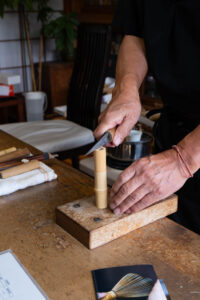
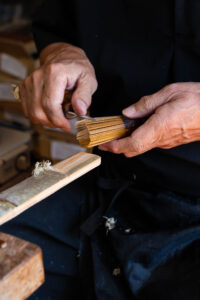
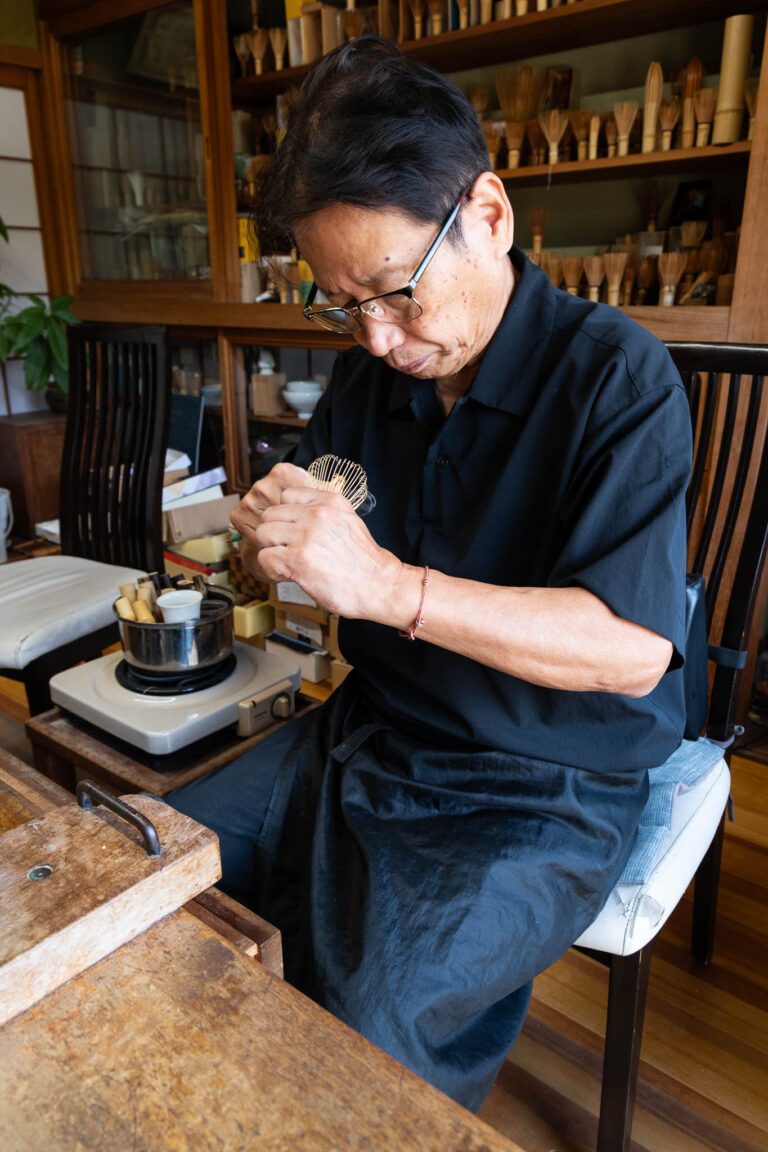
On my last trip to Kyoto I went to Suikaen family for a chasen workshop. I was very curious how tradition came to our modern lives and is heavily marketing nowadays with the matcha boom.
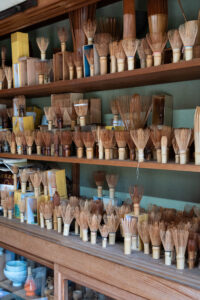
In the mountain village of Takayama, in Japan’s Nara Prefecture, craftsmen have made bamboo tea whisks by hand for 500 years. This whisk is called a chasen, and it’s used to mix matcha in tea ceremony. Today, only 16 houses still make it this way, and together they produce over 90% of all chasen in Japan.
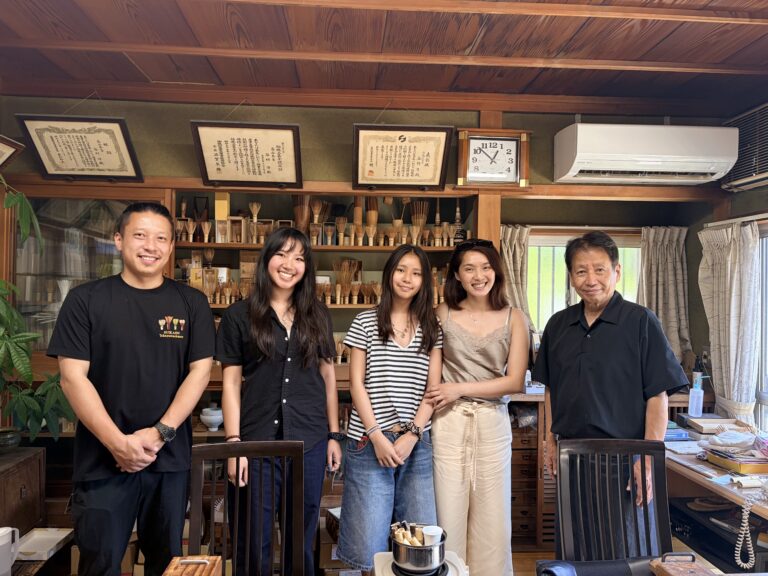
One of the workshops I have visited is Suikaen, currently run by 25th-generation craftsman Yasaburo Tanimura alongside with his son Keiichiro Tanimura. Traditionally, the family works closely with tea schools, supplying and shaping whisks to match each school’s own philosophy and ceremony style.
a bit of history
The craft began around 1500. Sōzei, son of the local lord, made the first chasen at the request of his friend Murata Jukō, who founded the simple, rustic style of tea ceremony known as wabi-cha.
Later, when Takayama Castle fell in the late 1500s, the departing lord gave 16 samurai families the exclusive right to make these whisks passing down from parent to first son.
As Japanese tea culture and formal schools (like Urasenke and Omotesenke) expanded under the shogunate, Takayama whisk-makers became the officially protected, exclusive suppliers for the art of tea, exclusive suppliers for the art of tea. To protect their secrets, the families worked at night so no one could watch, and they formed a guild whose official job was guarding a local shrine. This kept outsiders away for centuries.
How chasen is made
Making a chasen takes years and uses no glue or metal, just one piece of bamboo. First, the bamboo is harvested in winter and boiled to remove oils, then aged for two to six years.
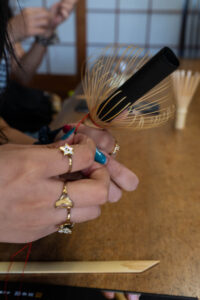
Only then does the carving begin. The stalk is split into 16 sections, then split again and again until it has 64 to over 120 thin tines. The hardest step is shaving the tips underwater until they’re almost see-through, so they’re flexible enough to whisk tea without snapping. Because the work is so precise, only 10-15 whisks can be made per day.
Chasen pour les écoles de thé
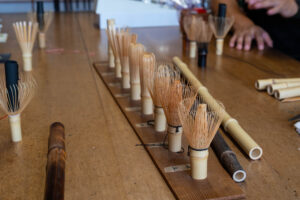
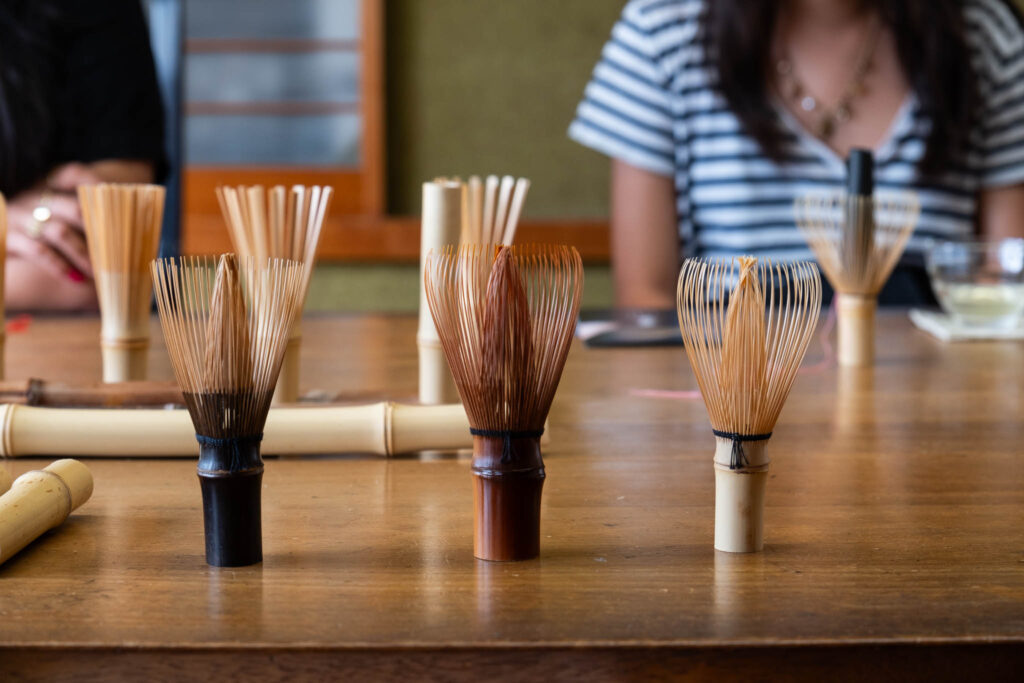
There are three types of bamboo used, each linked to a different tea school. White bamboo is sun-bleached and flexible, used by the Urasenke school. Soot bamboo comes from old farmhouse roof beams, smoked for 50 to 200 years, and is used by Omotesenke. Black bamboo is stiff and dense, used by Mushakōjisenke.
There are actually around 80 whisks shapes but three are the most famous shapes :
- The shin shape curves inward and makes thick foam.
- The straight shape is the oldest and makes very little foam.
- The standard shape, called kazuho, is a practical middle ground for everyday use.
One of my favourite tea school and worth knowing is the Yabunouchi school where tradition is deeply linked to the samurai class. Founded by Yabunouchi Kenchū Jōchi, who studied alongside the famous tea master Sen no Rikyū, this school favors a rougher, more humble style true to its warrior-class roots, so its whisks are shorter and sturdier, with tines that flare gently outward instead of curling in.
The result is a thin layer of foam that still lets you see the tea’s deep green color underneath.
Keiichiro Tanimura told us that nothing much happens in the mountains of Takayama or even Nara. For us who are based in France, that is exactly what makes these traditions so fascinating, in a world where everything is heavily marketed.
Whisking matcha with a traditional chasen is the most comforting ritual of my week. At Kisuyu, we honor tradition rather than lean on lattes, and a Takayama chasen is the best way to experience matcha as it was meant to be enjoyed.