
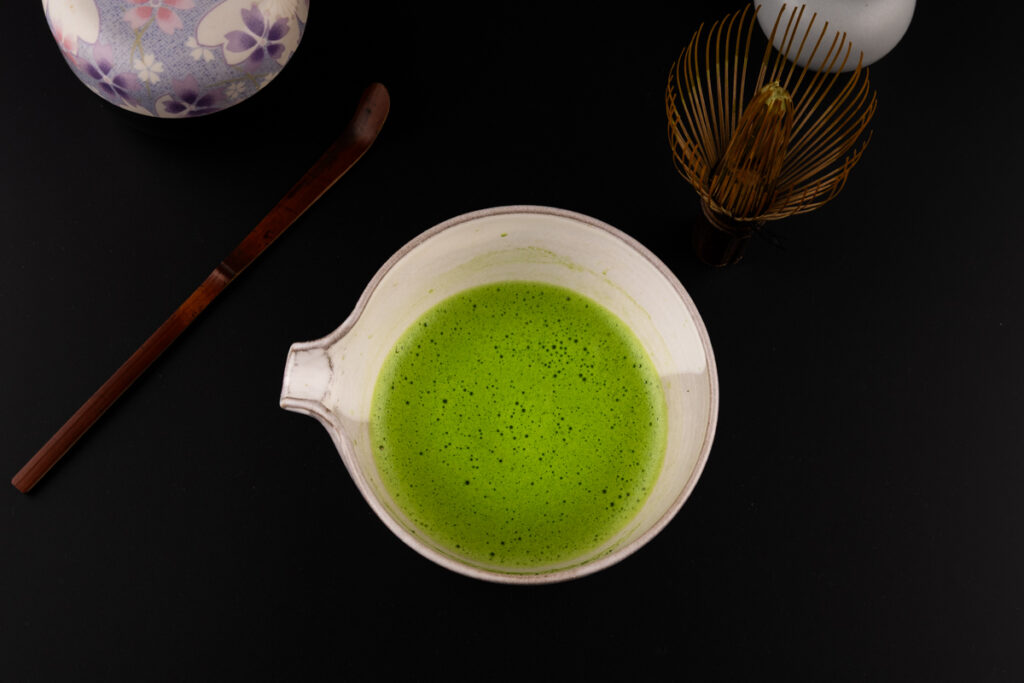
Chinese Origins (9th century)
The ancestor of matcha was born in China during the Tang dynasty. Buddhist monks pressed tea leaves into bricks, ground them into powder, and whisked them in hot water.
Arrival in Japan (1191)
Zen monk Eisai brought tea back from China and planted the first seeds at a Kyoto temple. He wrote : “Tea is a miraculous medicine for maintaining health.”
Matcha became the heart of Zen meditation. Monks drank it to stay alert during long hours of meditation.
The Tea Ceremony (16th century)
Sen no Rikyū, legendary tea master, codified chanoyu (茶の湯), the Japanese tea ceremony. Matcha became an art, a philosophy, a ritual.
Four principles :
- 和 (Wa) Harmony
- 敬 (Kei) Respect
- 清 (Sei) Purity
- 寂 (Jaku) Tranquillity
Matcha Today
Matcha has conquered the world. From Tokyo to Paris, from New York to Lyon, it has found its way into cafés, patisseries and kitchens.
But beware between authentic matcha and cheap green powder, there is a world of difference.
How Is Matcha Produced?
The production of matcha is a meticulous process that begins well before the harvest.
Step 1 : Shading (覆い, Ooi)
The secret of matcha.
3 to 4 weeks before harvest (late April), the tea plants are covered to block 85–95% of sunlight.
Why?
This light “deprivation” triggers a chemical transformation in the plant :
Chlorophyll ↑ → Intense jade green colour L-theanine ↑ → Depth of sweetness and umami Bitter catechins ↓ → Less astringency
Result : Brilliantly green leaves, sweet and rich in umami flavour.
Shading Techniques : Three Approaches
1. Direct Shading (Jikagise 直掛け)
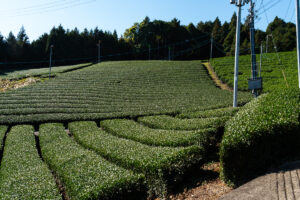
Cloths are placed directly over the tea plants. Simple and effective, this method concentrates resources on the quality of the cultivar and terroir.
Profile: Balanced, accessible matcha
2. Tana with Kareisha (棚 + 寒冷紗)
A raised structure (1.5–2m) supports synthetic cloths, allowing excellent air circulation. A compromise between tradition and modernity.
Profile : Characterful matcha, pronounced umami
3. Honzu (本簀), The Uji Tradition
Construction of the honzu :
- Bamboo poles form the structure (tana)
- First layer: rice straw mats (warazutsu) placed 50cm above the plants
- Second layer: reed mats (sudare or yoshizu)
- Third layer: additional straw to refine the shading
The process :
- Days 1–7: 50% shading (rice straw)
- Days 8–15: 70% shading (reeds)
- Days 16–25: 95% shading (final layers)
Invented in the 17th century in Uji by producer families, the honzu is a living heritage passed down from generation to generation.
Profile : Exceptional matcha, unrivalled aromatic complexity
Step 2 : Harvest, First Harvest
Late April to early May: the time of the first harvest (一番茶, ichibancha).
Only the first 2–3 leaves of the bud are picked, often by hand.
Why is the first harvest so important?
After winter, the tea plant has accumulated nutrients for months. The first spring shoots are:
- Rich in L-theanine → maximum sweetness
- High in chlorophyll → vibrant colour
- Low in catechins → little bitterness
- Tender and silky → velvety texture
What about subsequent harvests?
The second and third harvests (June–July, August) regrow quickly under the summer sun. The result:
- More bitterness
- Less sweetness
- Dull colour
- Grainy texture
- Low price
At KISUYU, we offer first harvest only.
Step 3 : Transformation into Tencha
Freshly picked leaves are immediately:
- Steamed (30–40 seconds) → Stops oxidation, preserves green colour
- Rapidly cooled
- Gently dried
Result: Tencha (碾茶), the raw material of matcha.
Stems and veins are removed. Only the tender heart of the leaf is kept.
A Crucial Step Often Overlooked : Tencha Maturation in Uji
Between drying and grinding, there is a step that few people know about — maturation.
What is Maturation?
After being transformed into tencha (dried leaves), they are not ground immediately. They are stored in cold rooms at controlled temperature and humidity.
Duration: From a few weeks to 6 months, sometimes longer for grand cru.
Why Mature the Tencha?
Maturation is not simply storage. It is a slow, controlled transformation.
- Development of Aromas
Like wine or cheese, tencha evolves during maturation :
- Raw vegetal aromas soften
- Umami develops and deepens
- Herbaceous notes become more complex
- A slight natural sweetness emerges
This is the difference between a young wine and an aged one.
The Philosophy of Maturation in Uji
In Uji, producer families have passed down secret maturation schedules for generations.
Example :
- Tencha harvested late April
- Cold room maturation May to October (6 months)
- Grinding November–December
- Released in winter (traditional matcha season)
At KISUYU : Some of our matchas follow this maturation approach to preserve their unique flavour.
Step 4 : Grinding, The Art of Stone
This is where the magic happens.
The tencha is ground between granite stone millstones rotating slowly (30–40 turns per minute).
Why does this matter?
- Controlled temperature (< 30°C) → Preserves nutrients
- Ultra-fine grinding → Silky texture
- Slow and patient → 1 hour = 30 grams of matcha
Industrially ground matcha (by metal machines) heats up, oxidises, and loses its fineness.
The test: Rub matcha between your fingers. If it is as silky as talc, that is a good sign. If it is grainy, walk away.
Matcha Regions in Japan
Not all matchas are equal. Terroir matters enormously.
1. Uji (宇治), The Birthplace of Matcha Kyoto Prefecture
Uji has been producing tea for 400 years. It is THE sanctuary of Japanese matcha.
Why is Uji unique?
- Natural morning mist (ideal humidity)
- Gentle hills (perfect drainage)
- Uji River (pure mountain water)
- Temperate climate (neither too hot nor too cold)
Invention of the honzu : It was in Uji, in 1738, that Nagatani Sōen perfected the honzu shading method. Uji producer families (15 generations for some) jealously pass down this expertise.
Profile : Deep umami, velvety sweetness, complexity
2. Nishio (西尾), Volume Production Aichi Prefecture
Nishio produces 60% of Japanese matcha. Warm climate, fertile land, larger-scale production.
Profile: Accessible matcha, good value for money
3. Fukuoka (福岡), The Southern Terroir Kyushu
Warmer climate, early harvests. Passionate family producers.
Profile: Natural sweetness, floral notes
4. Shizuoka (静岡), Diversity Shizuoka Prefecture
Japan’s leading green tea producing region (not specialised in matcha, but some very good producers).
Cultivars : The Genetics of Flavour
The cultivar (tea plant variety) greatly influences the taste much like grape varieties in wine.
Yabukita (やぶきた) The classic (70% of Japanese production)
- Balanced
- Gentle
- Moderate umami
- Easy to drink Used for: Everyday matcha, entry level
Saemidori (さえみどり) Umami incarnate
- Intense umami
- Pronounced sweetness
- Brilliant jade green colour
- Very little bitterness Used for: Superior quality matcha
Okumidori (おくみどり) Finesse
- Floral aromas
- Delicate sweetness
- Vibrant colour
- Silky texture Used for: Refined matcha
Asahi (あさひ) The rare one
- Very little cultivated (difficult to grow)
- Extremely smooth
- Almost naturally sweet
- Very high price Used for: Exceptional matcha, ceremonies
Gokou (ごこう) The complex one
- Rich aromatic profile
- Umami-sweetness balance
- Pronounced vegetal notes
First Harvest (Ichibancha, 一番茶) April–May
The tea plant has slept all winter. It has built up reserves. The first spring shoots are exceptional.
- Maximum L-theanine → Sweetness
- Young leaves → Silky texture
- Few catechins → No bitterness
- Jade green colour
- Complex aromas: nori, umami, slight sweetness
Second Harvest (Nibancha, 二番茶) June/July
The tea plant regrows quickly under the summer sun, exhausting its reserves.
- Less L-theanine → Bitterness
- Thick leaves → Grainy
- More catechins → Astringency
- Olive green colour
- Simple aromas: grassy, bitter
Japanese Matcha : Why It Matters
Japan, the Land of Matcha
Matcha was born in Japan (or rather, perfected there). 400 years of expertise, transmission and culture.
What Japan brings :
- Ancestral expertise : Uji, Nishio, Fukuoka master every step
- Elite cultivars : Yabukita, Saemidori, Okumidori developed in Japan
- Strict standards : Quality controls, rigorous traceability
- Respect for the plant : Sustainable farming, no overexploitation
- The soul of matcha : Zen philosophy, ritual, intention
Our approach at KISUYU :
We have chosen Japanese matcha exclusively because :
- It is our passion and our expertise
- We work directly with producers we know personally
- We want to preserve and share this ancestral expertise
- The aromatic profile matches our vision of matcha
This does not mean that other origins have no place. Everyone may have their own preferences. We have simply chosen to specialise in what we love deeply.
The Benefits of Matcha
Matcha is not just delicious. It is also a concentrate of benefits.
1. Gentle and Lasting Energy
The secret? L-theanine.
Matcha contains both :
- Caffeine (approximately 70mg per 2g)
- L-theanine (a relaxing amino acid)
Result : A calm, focused energy without the brutal spike and crash of coffee.
Zen monks used matcha to meditate for hours without drowsiness or agitation.
2. Powerful Antioxidants
Matcha is 137 times richer in antioxidants (EGCG) than a classic brewed green tea.
Why? You consume the whole leaf, not just its infusion.
Antioxidants :
- Protect cells
- Fight ageing
- Support the immune system
3. Concentration and Mental Clarity
The caffeine + L-theanine combination improves :
- Concentration
- Mental clarity
- Alertness without nervousness
Perfect for : Working, studying, creating
4. Natural Detox
Chlorophyll (which gives matcha its green colour) helps to :
- Eliminate toxins
- Purify the blood
- Support the liver
5. Metabolism and Wellbeing
Matcha gently stimulates metabolism. It is not a miracle weight-loss product, but it supports a healthy lifestyle.
How to Recognise Good Matcha?
Not all matchas are equal. Here is how to tell the real from the fake.
1. Colour Good matcha : Brilliant, vibrant jade green Poor matcha: Dull olive green, yellowish
2. Texture Good matcha : Ultra-fine powder, as silky as talc Poor matcha: Grainy, lumpy
3. Smell Good matcha : Fresh grass, slightly sweet, nori notes Poor matcha: Dry hay, bitter, no aroma
4. Taste Good matcha : Gentle umami, light vegetal, no aggressive bitterness Poor matcha: Bitter, astringent, metallic
Storing Matcha
Matcha oxidises quickly when exposed to air, light and heat.
Our advice :
- Airtight container : Close well after each use
- In the refrigerator : Ideal for prolonging freshness
- Away from light
- Away from moisture
- Consume within the first month after opening
Tip: Buy small quantities (30g) rather than a large jar that will oxidise.
FAQ : Your Questions About Matcha
Does matcha contain caffeine? Yes, approximately 70mg per 2g (less than coffee, more than green tea). Thanks to L-theanine, the effect is gentle and prolonged.
Can you drink matcha every day? Absolutely. 1 to 2 bowls per day is ideal.
Does matcha help you lose weight? It gently boosts metabolism, but it is not a miracle product. Pair it with a balanced diet.
What is the difference between matcha and green tea? Matcha is a green tea (Camellia sinensis), but grown in the shade, ground into powder, and consumed whole (not infused).
Organic or conventional matcha? Opt for organic or farms practising sustainable farming with minimal pesticides.
Why is Japanese matcha so expensive? First harvest, shading (honzu, tana), slow stone grinding, ancestral expertise, small quantities = exceptional quality = justified price.
Is Chinese matcha good? There are good Chinese green teas, but the tradition and expertise of matcha are Japanese. The aromatic profile is different.
How do you prepare matcha? → We have a dedicated article on this subject.
Does matcha expire? Yes, it oxidises. Consume within the first month after opening, stored in a cool place.
In France, matcha is finding its place between tradition and modernity.
At KISUYU, we are proud to accompany you on this discovery.
Every KISUYU tea is a page of your Japanese travel journal.
Discover our selection of first harvest Japanese matchas.

